Cell & Gene Therapies
Cell and gene therapies represent a new treatment paradigm for many diseases including cancer. Friends of Cancer Research (Friends) supports alignment in the cell and gene therapy drug development space to ensure these innovative therapies safely get to patients who need them faster. Our work applies lessons learned from emerging clinical development programs and FDA approved cell therapies and clinical data to help overcome obstacles and advance the next generation of cell therapies as well as gene therapies.
Visit us on LinkedIn and X to stay up to date with #CGTFriends.
Recent approvals and clinical experience with cell therapies demonstrate their potential to improve outcomes for patients with cancer. Cell therapies, such as chimeric antigen receptor (CAR) T-Cell therapies, are a type of immunotherapy where a patient’s immune cells are removed, genetically engineered to enhance their cancer-fighting capabilities, and then reintroduced into the patient . Despite promising advancements with CAR-T therapies for treating hematologic malignancies and a tumor infiltrating lymphocytes (TILs) therapy for certain melanomas, there are several unique challenges throughout the drug development process that may slow progress. Current regulatory frameworks and development processes have the opportunity to evolve alongside technological advances in cell therapies. By incorporating appropriate regulatory flexibility, we can ensure that these frameworks continue to facilitate innovation. This approach can enable more efficient, cost-effective methods for identifying safety signals and testing new candidate products as quickly and safely as possible.
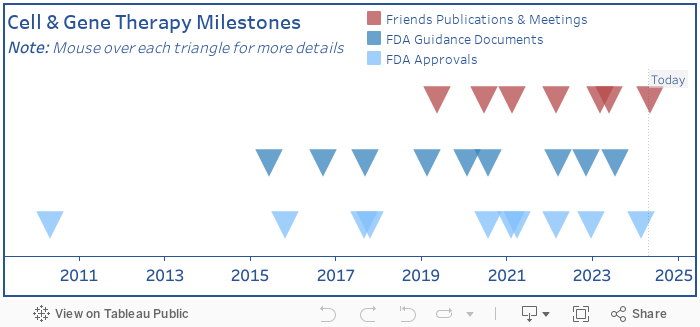
Since the release of Friends’ first white paper related to cell and gene therapies in 2019, the FDA published several guidance documents incorporating concepts we proposed, and FDA continues to highlight advances in cell and gene therapies as a priority area:
Studying Multiple Versions of a Cellular or Gene Therapy Product in an Early-Phase Clinical Trial (Final Guidance, 2022)
Considerations for the Development of Chimeric Antigen Receptor (CAR) T Cell Products (Final Guidance, 2024)
Human Gene Therapy Products Incorporating Human Genome Editing (Final Guidance, 2024)
Manufacturing Changes and Comparability for Human Cellular and Gene Therapy Products (Draft Guidance, 2023)
These guidance documents provide cell and gene therapy developers and sponsors with the regulatory flexibilities that will ensure safe and effective products get to patients efficiently. As additional experience is gained and new challenges emerge related to the development and use of cell and gene therapies, Friends will continue to convene stakeholders to propose regulatory policy solutions that address these barriers to advance development and regulation of cell and gene therapy products.
Cell and gene therapies hold promise to provide cures for patients with cancer. While there are scientific challenges to incorporating cell therapies into treatment for all cancers, new technologies are supporting ways to overcome these challenges. However, as the science moves forward, so too does the regulatory landscape. The goal of our work is to optimize development and policies to support more efficient access, safe use, and enable broader application and access to the next generation of cell and gene therapies for patients.
Project Outcomes
2024:
- Friends co-hosted a public meeting with Parker Institute for Cancer Immunotherapy (PICI) to discuss innovative frameworks and proposals for enhancing the safety, expansion, and activity of the next generation of cell-based gene therapies. Panels addressed operational and biological challenges to advancing cell and gene therapies, novel approaches to clinical trials, the expansion of cell therapies for solid tumors, and included patient insights and experiences with these complex therapies.
- As a follow-up to the joint PICI meeting, Friends hosted a webinar providing an opportunity for advocates to ask further questions and to detail the discussions from the previous meeting.
- Chris White, a patient advocate involved in the meetings, shared his experience with receiving and advocating for cell therapies. His Q&A blog can be found here.
2023
- Friends led multi-stakeholder discussions to evaluate how existing data can be safely leveraged across products and between versions of engineered cell therapy products to support more efficient development, iterative product improvements, and broader access to these therapies. Those discussions culminated in a public meeting and white paper to inform the development of the next generation of cellular therapies and support policy discussions between key stakeholders in the drug development process.
2022
- Friends published a paper to address challenges related to reporting and characterizing emerging novel toxicities associated with the use of immuno-oncology therapies including cell therapies.
2020
- Friends published a paper discussing how patient-reported outcomes (PROs) can be leveraged to inform patient experience and long-term safety of cell and gene therapies.
2019
- Friends and the Parker Institute for Cancer Immunotherapy developed a white paper and hosted a public meeting that identified potential approaches to address development and regulatory hurdles encountered during early- and late-stage development of cell and gene therapies.